Jul 13, 2026 | Inflammation & Chronic Disease
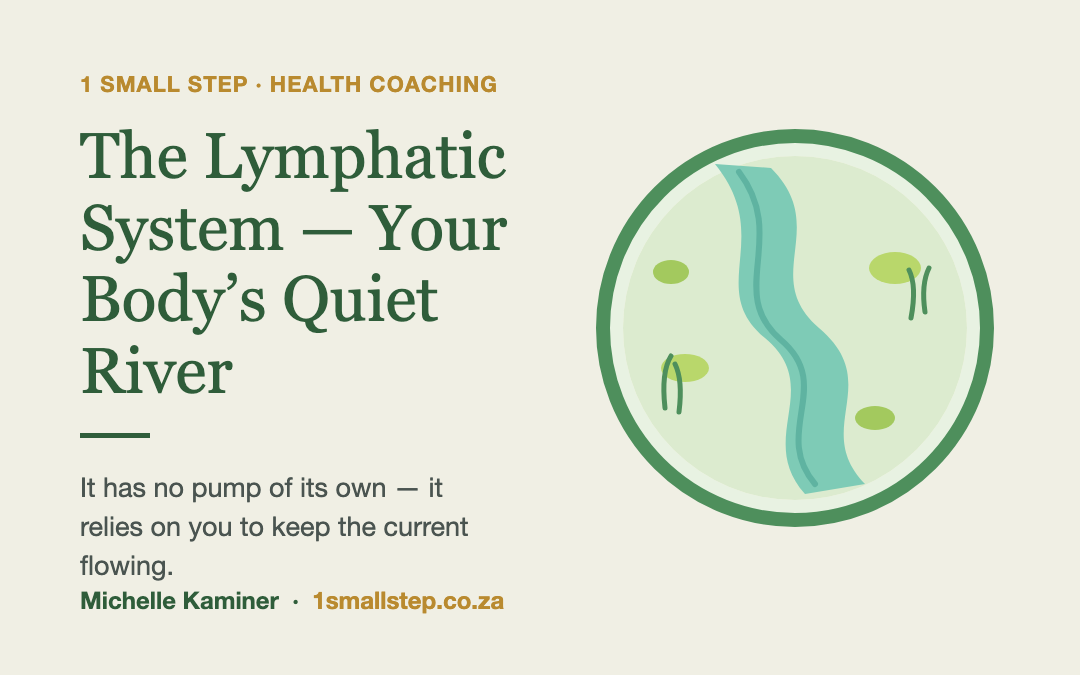
A healthy river doesn’t make much noise or require attention.
It simply flows, carrying away what no longer belongs, nourishing everything around it and keeping the landscape healthy. Most of us never think about a river — until it stops flowing.
Your lymphatic system is much the same.
It quietly flows through almost every part of your body, clearing away excess fluid, cellular waste and unwanted debris while helping your immune system stay alert. Most of the time you don’t notice it’s there… until the current begins to slow.
Unlike your blood, which is pumped by your heart, your lymphatic system has no pump. It depends on your movement, your breathing and your muscles to keep the river flowing.
When the river slows…
A sluggish lymphatic system doesn’t usually announce itself dramatically. Instead, it whispers…
You may notice:
- waking up puffy
- swollen glands that linger after an illness
- stiff joints first thing in the morning
- dull skin or breakouts
- frequent coughs and colds that linger
- a heavy kind of brain fog that’s hard to describe.
These symptoms are clues that your body’s natural “river” isn’t flowing as freely as it should.
Why the current slows
Our bodies were designed for movement.
Instead, many of us spend our days sitting, breathing shallowly because of stress, drinking too little water and moving less than we should. Little by little, the current slows.
Like any slow-moving river, things begin to settle instead of being carried away.
Helping the river flow again
The encouraging news is that your lymphatic system often responds well to simple, consistent habits.
- Walk every day.
- Take a few slow belly breaths several times a day.
- Stay well hydrated.
- Try dry body brushing before your shower.
- If you have one, spend five minutes on a rebounder.
- Finish your shower with a burst of cool water.
- Explore The Big 6 Lymph Protocol.
None of these is a miracle cure, but each one is a Small Step towards helping to restore the gentle current your body relies on every day.
Looking upstream
So now you know ‘what’ is happening — at 1 Small Step, we want to know why.
If your body feels puffy, sluggish or slow to recover, it’s worth asking whether your body’s quiet river is flowing as it should.
It’s one of the many things we see during Live Blood Analysis. The message from sluggish lymph is very clear. We’ll build a Root Cause picture together.
The answer isn’t about forcing the body to work harder, but to work smarter.
It’s simply about helping the river to flow again.
Michelle Kaminer — 1 Small Step
Email: healthcoach@1smallstep.co.za
WhatsApp: 084 214 2127
Website: www.1smallstep.co.za
Mar 16, 2026 | Inflammation & Chronic Disease
It is quiet. Not famous. Not sexy. But very important.
- First, Biology 101: Amino acids are the building blocks (like Lego pieces).
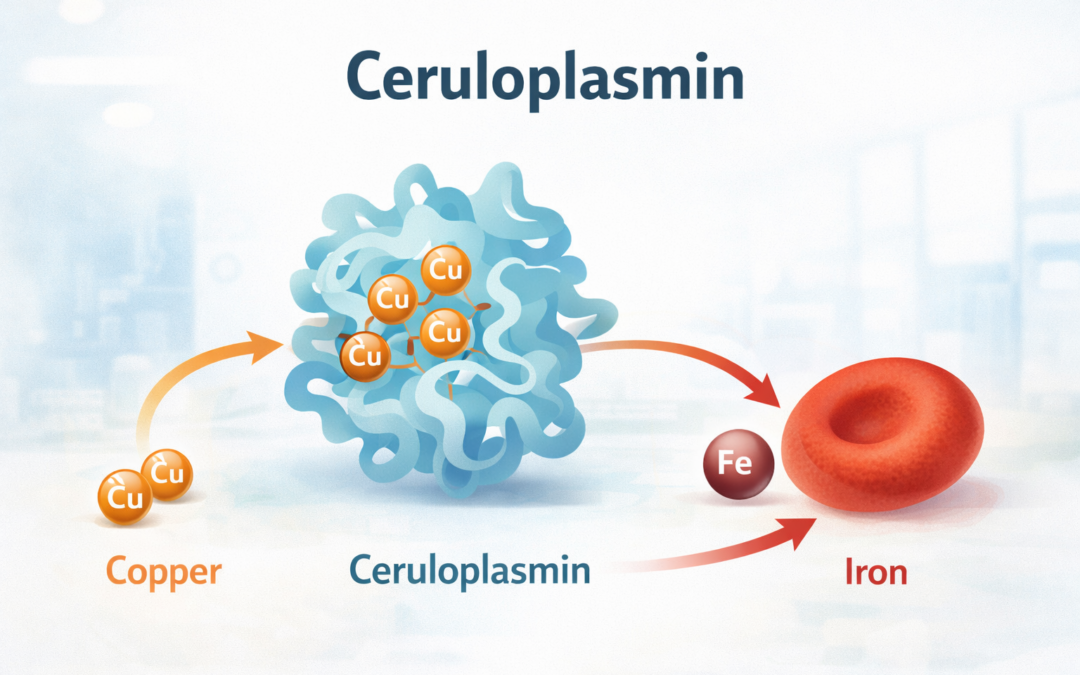
- Proteins are the structures built from those pieces. – Ceruloplasmin is a large protein made from many amino acids linked together. Your liver manufactures it, and then releases it into the bloodstream where it carries copper safely through the blood and helps iron move where it needs to go.
Ceruloplasmin is basically an Uber.
Your liver makes this very large and carefully folded protein, and its main job is to carry copper safely around the body. Copper is a tiny mineral that helps with a lot of important jobs like:
- making energy
- helping iron work properly
- building blood vessels and hormones
- supporting the brain and immune system
- making skin pigment (melanin)
So copper is useful… but it’s also a bit like a toddler with a hammer — helpful in the right situation, not so much if left unsupervised.
That’s why your body puts copper inside ceruloplasmin, the Uber, to move it around safely.
The Important Bit
Ceruloplasmin doesn’t just move copper…It also helps iron get where it needs to go in the body.
Think of it like this:
- Iron is the delivery truck
- Copper is the engine
- Ceruloplasmin is the ignition key
Without ceruloplasmin:
- iron can get stuck in storage
- blood cells may struggle to form properly
- people can look anemic even when iron is present in the body because it is not in the blood, which is where we look for it 👀
This is why people sometimes have:
- fatigue that doesn’t resolve
- neurological symptoms that don’t respond to treatment
- anemia that doesn’t respond to iron
So these symptoms are not treatable, medicatable disease states, but rather a signal that the body isn’t managing copper or iron efficiently
Some ways we can look at this with ‘new eyes’:
- poor mineral balance
- low bioavailable copper
- retinol (real vitamin A) issues
- magnesium depletion
- chronic stress burning through minerals
In other words…
The body is struggling to activate and use minerals, not necessarily lacking anything….
Your body has copper……but the Uber drivers are missing.
So copper is either:
🚫 not getting picked up
🚫 not getting delivered
🚫 or sitting around causing chaos
Meanwhile iron is in the warehouse yelling:
🙋🏽“HELLO? Anyone going to deliver me to the red blood cells?!” 🗣️
So while the name sounds like something from a chemistry exam, ceruloplasmin is really just part of the body’s mineral transport system — helping copper and iron get to the right place at the right time. How strange then, that in this modern era of medical miracles, biohacking and supplement abundance, no-one is talking about the 1 puzzle piece that most of us didn’t even know we were missing
Find the piece and slot it in Start rebalancing and feeling better. Why wait?
~Michelle
WhatsApp 084 214 2127 or email healthcoach@1smallstep.co.za to get started
Jan 7, 2026 | Inflammation & Chronic Disease
🫣 Unpopular POV… If arthritis were caused by age alone, every person over 60 would be stiff, sore, and shuffling.
🧐 And no young people would suffer, and that’s simply not the case.
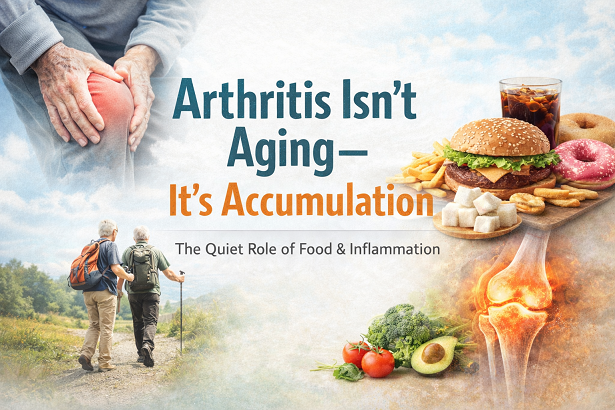
🍽️ Arthritis has more to do with what, when and how you eat than how many birthdays you’ve had.
We all know people in their 30s with joint pain. And we all know people in their 70s who garden, surf, walk mountains, or kneel on the floor like toddlers.
🤕 Why does this idea feels so uncomfortable? Maybe because aging is passive, but food, stress, and lifestyle aren’t.
If arthritis is “just getting older,” then it’s inevitable; but if it’s driven by inflammation, blood sugar swings, mineral imbalances, gut irritation, and modern food… then suddenly there’s participation involved 🗣️
And that’s confronting.
🔥Chronic inflammation, blood sugar chaos, mineral imbalances (calcium going where it shouldn’t, magnesium not being where it should), poor fat metabolism, gut permeability and yes — the food we eat every single day without thinking about it, all combine to create a terrain that will fuel deterioration🌀
⚡Arthritis isn’t a lightning strike ⚡ It’s more like death by a thousand small, socially acceptable choices.
A very unpopular food truth
🍞 Modern food isn’t neutral.
⛔ Ultra-processed oils, refined carbohydrates, excess sugar, and mineral-stripped foods quietly fan inflammatory flames for years before symptoms show up 🔥
Joints don’t get angry for no reason ~ Pain isn’t random.
🤫 It’s the end of a very long conversation the body has been trying to have quietly.
Long before joints hurt, the body often whispers: 🤕 fatigue, stiffness, poor recovery, digestive issues, restless sleep etc., so that by the time pain shows up, compensation has run out.
✨The quiet role of food
Ultra-processed foods, refined carbohydrates, damaged fats, and sugar don’t cause instant arthritis.
They create an inflammatory environment that joints have to try and function in for years.
⚡Arthritis isn’t a lightning strike.
It’s accumulation.
🔫 What about genetics I hear you ask?
For sure Genetics loads the gun, but it’s choices that determine of the trigger ever gets pulled.
Your birthday didn’t inflame your joints. 🕯️🕯️🕯️
Your body simply reached the point where it couldn’t adapt anymore.
⁉️ If arthritis were only age-related, curiosity would be pointless.
But if food, digestion, minerals, and inflammation matter, then questions matter too ‼️
And better questions lead to better options. And better options lead to a healthier terrain. And a healthier terrain leads to less deterioration – healthier, pain-free mobility being only 1 perk of this process…
Time to see the health coach?
📲 healthcoach@1smallstep is how you book your appointment.